The landscape of education has always evolved alongside the technologies of its time — from the printing press to the chalkboard, from textbooks to computers. Today, augmented reality (AR) stands at the frontier of this ongoing transformation, promising to redefine how students learn, explore, and engage with knowledge. Unlike virtual reality, which immerses users in a fully digital environment, augmented reality overlays digital content onto the real world, blending the physical and virtual in seamless and interactive ways. As AR technology becomes more accessible through smartphones, tablets, and wearable devices, its potential application in classrooms around the world is growing rapidly. Education systems that embrace this technology may well be shaping the future of learning itself.
One of the most compelling advantages of augmented reality in education is its ability to make abstract or complex concepts tangible and visually engaging. Imagine a biology student who can point a tablet at a textbook page and watch a three-dimensional human heart beating in real time, or a history class that uses AR to virtually reconstruct ancient civilizations right in the classroom. These immersive experiences go far beyond what static images or even video can offer, enabling students to explore subjects from multiple angles and at their own pace. Research consistently shows that experiential and visual learning leads to better retention and deeper understanding, suggesting that AR-powered lessons could dramatically improve academic outcomes. By transforming passive observation into active exploration, augmented reality has the power to make learning genuinely exciting.
Beyond engagement, AR has significant potential to promote inclusivity and personalized learning in diverse educational settings. Students with different learning styles, abilities, or language backgrounds can benefit from interactive, multi-sensory AR experiences that adapt to their individual needs. For example, a student struggling with a mathematical concept might use an AR application that visualizes equations as physical objects they can manipulate, while a student with a hearing impairment might rely on visual AR overlays to supplement audio-based instruction. Furthermore, AR tools can provide instant feedback and guided assistance, reducing the pressure on teachers to address every student’s needs simultaneously. In this way, augmented reality acts as a powerful equalizer, helping to bridge learning gaps and ensure that education is more accessible to all.
Despite its promise, the integration of augmented reality into education faces several meaningful challenges that must be addressed before it can reach its full potential. The cost of AR-capable devices and high-quality educational software remains a significant barrier, particularly for underfunded schools in developing regions, threatening to widen rather than close the existing digital divide. Teachers also require substantial training and ongoing support to effectively incorporate AR tools into their curricula, and many institutions lack the infrastructure or resources to provide this. Additionally, concerns about screen time, data privacy, and the potential for distraction must be carefully considered, especially when designing AR experiences for young children. Addressing these obstacles will require coordinated effort from governments, educational institutions, and technology developers alike.
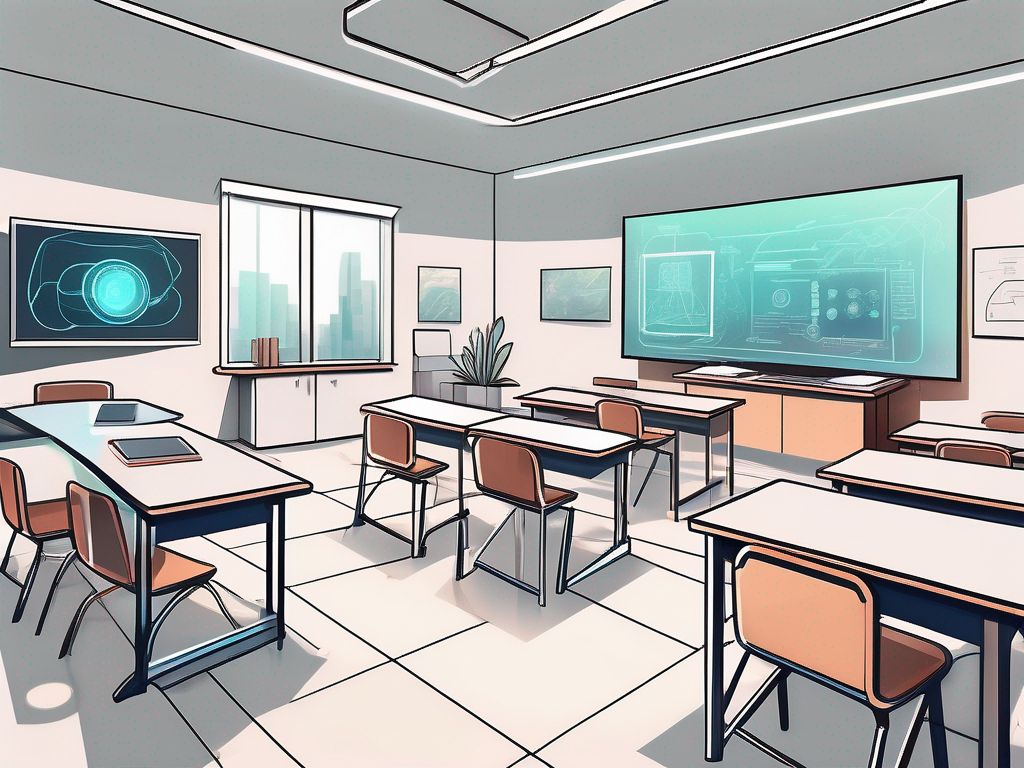
Looking ahead, augmented reality is poised to become an increasingly central pillar of modern education, not as a replacement for traditional teaching, but as a powerful complement to it. As hardware becomes more affordable, connectivity improves, and AR content libraries expand, the barriers to adoption will continue to fall. Forward-thinking educators and policymakers are already piloting AR programs with encouraging results, and the global edtech market is investing heavily in this space. The future classroom may be one where the boundaries between the physical and digital dissolve entirely, giving students the freedom to learn without limits — exploring the depths of the ocean, the surface of Mars, or the inner workings of a cell, all from their desks. Augmented reality is not merely a technological novelty; it is a glimpse into a richer, more dynamic, and more equitable future of learning.

